
5 Types of Enrichment for Dogs – Croney Research Group
Having a great enrichment program means incorporating multiple types of enrichment. There are five types of environmental enrichment: social, nutritional, occupational, sensory, and physical. Let’s look at examples of all five types of enrichment that you can use in your kennel. We encourage you to try at least one activity from each enrichment category and rotate activities regularly!
Social
Social enrichment means time with other dogs and humans. Social enrichment includes:
- Supervised play groups with other dogs
- Group housing for compatible dogs
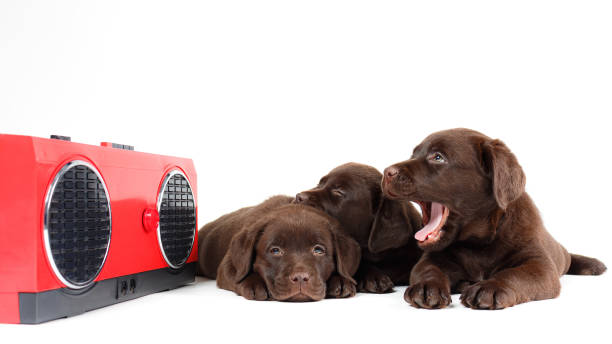
- Walks, play, praise, and petting with humans
*Social enrichment is not the same as socialization.
(Learn more: Puppy Socialization)
Nutritional
Nutritional enrichment encourages natural feeding behaviors. Examples include:
- Using puzzle feeders
- Freezing wet food in a lick mat for warm days
- Hiding food in different areas of the kennel to encourage dogs to search
- Providing safe chews
- Alternating feeds, treats, and chewable items
Occupational
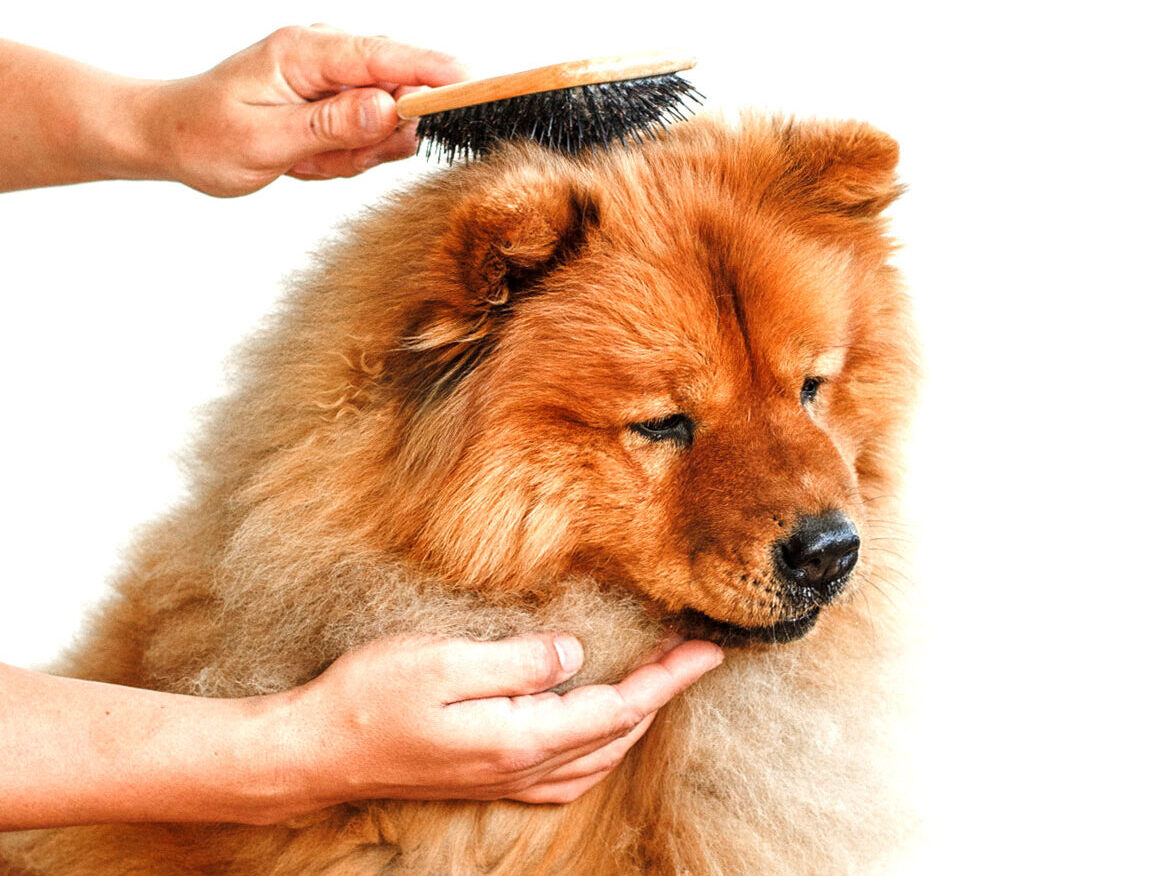
Occupational enrichment encourages physical and mental stimulation by giving dogs a “job.” Some examples include:
- Playing sports, such as agility or fly-ball
- Training using positive-reinforcement
- Giving food puzzles that require the dog to “work” to get the food
- Providing outdoor play areas that allow for digging
- Playing fetch
Sensory
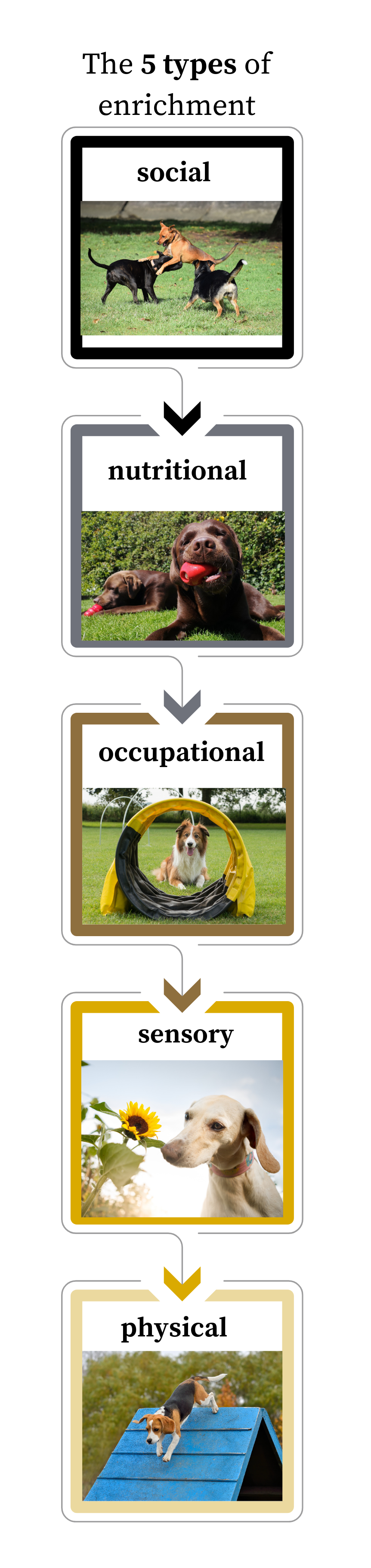
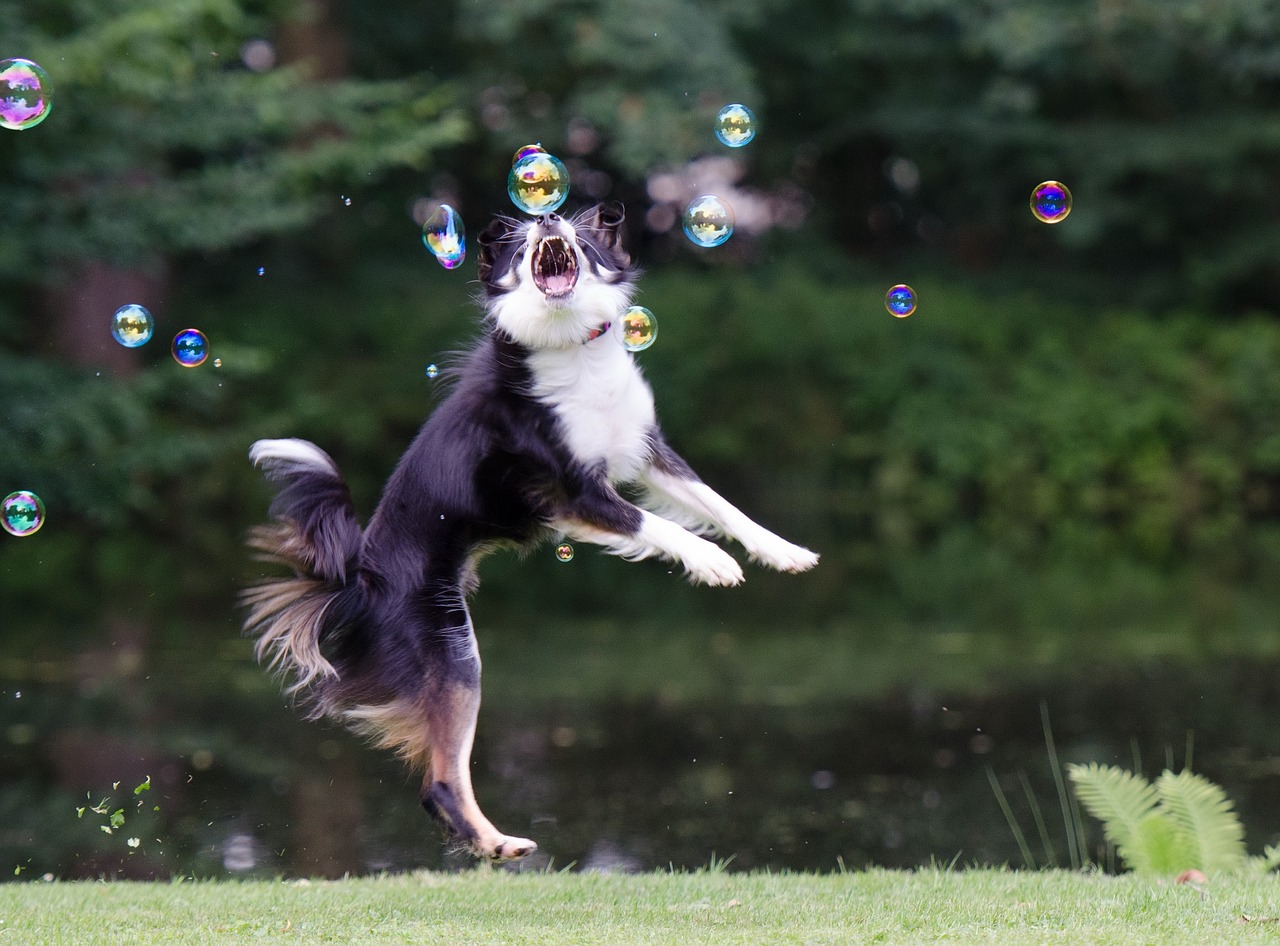
Sensory enrichment can be used to calm and stimulate dogs’ senses. Try:
- Placing visually stimulating objects outside a dog’s run (e.g., televisions, mobiles)
- Including intermittent soft music at low volumes, like classical music
- Adding interesting scents such as herbs (e.g., lavender, chamomile), spices (e.g., vanilla, coconut, ginger) or commercially available animal scents (e.g., rabbit). Place scented items inside a piece of PVC pipe with holes. Now scents can be easily added or removed from the dog’s pen.
Physical
Physical enrichment increases engagement in the social and physical environment. Altering the complexity of the dog’s living space increases natural behaviors. Try:
- Providing safe toys, switching them out regularly to prevent boredom
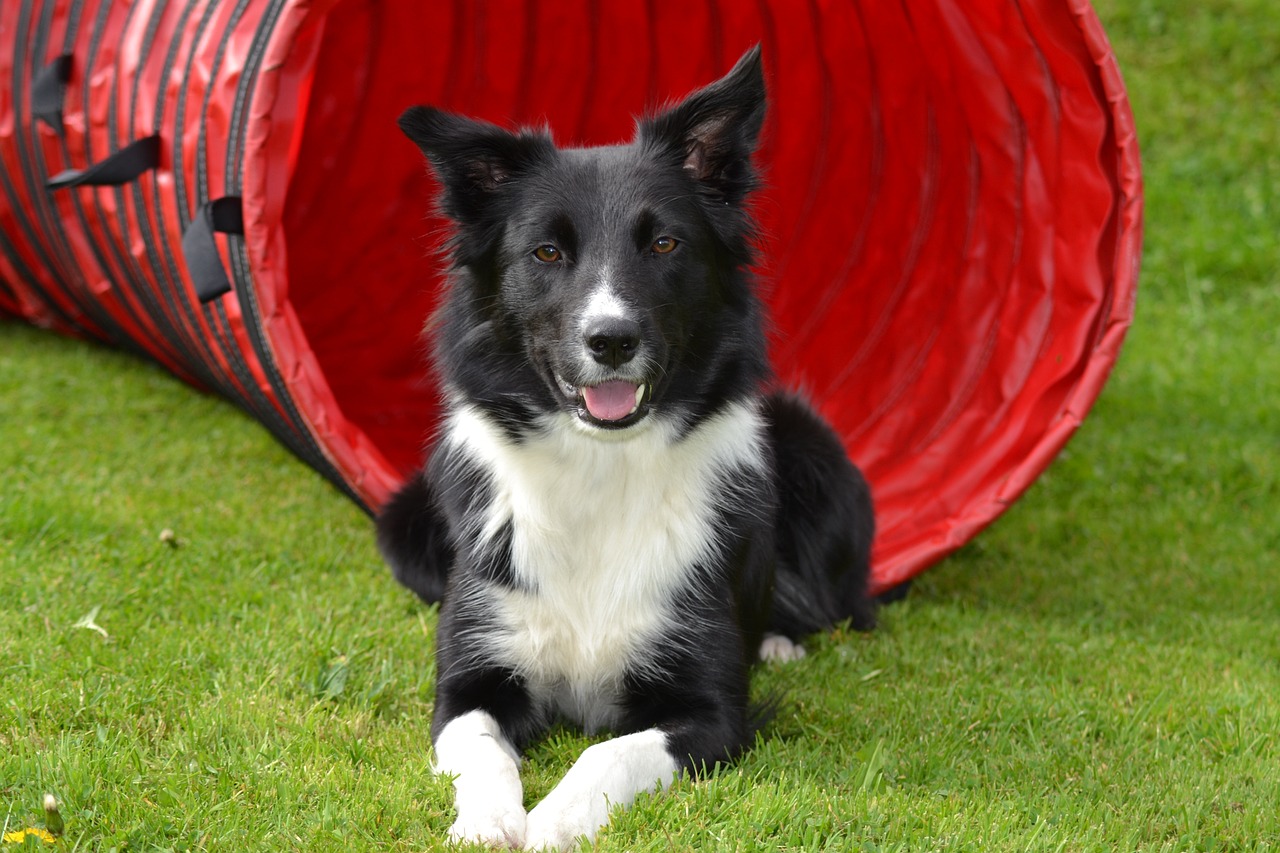
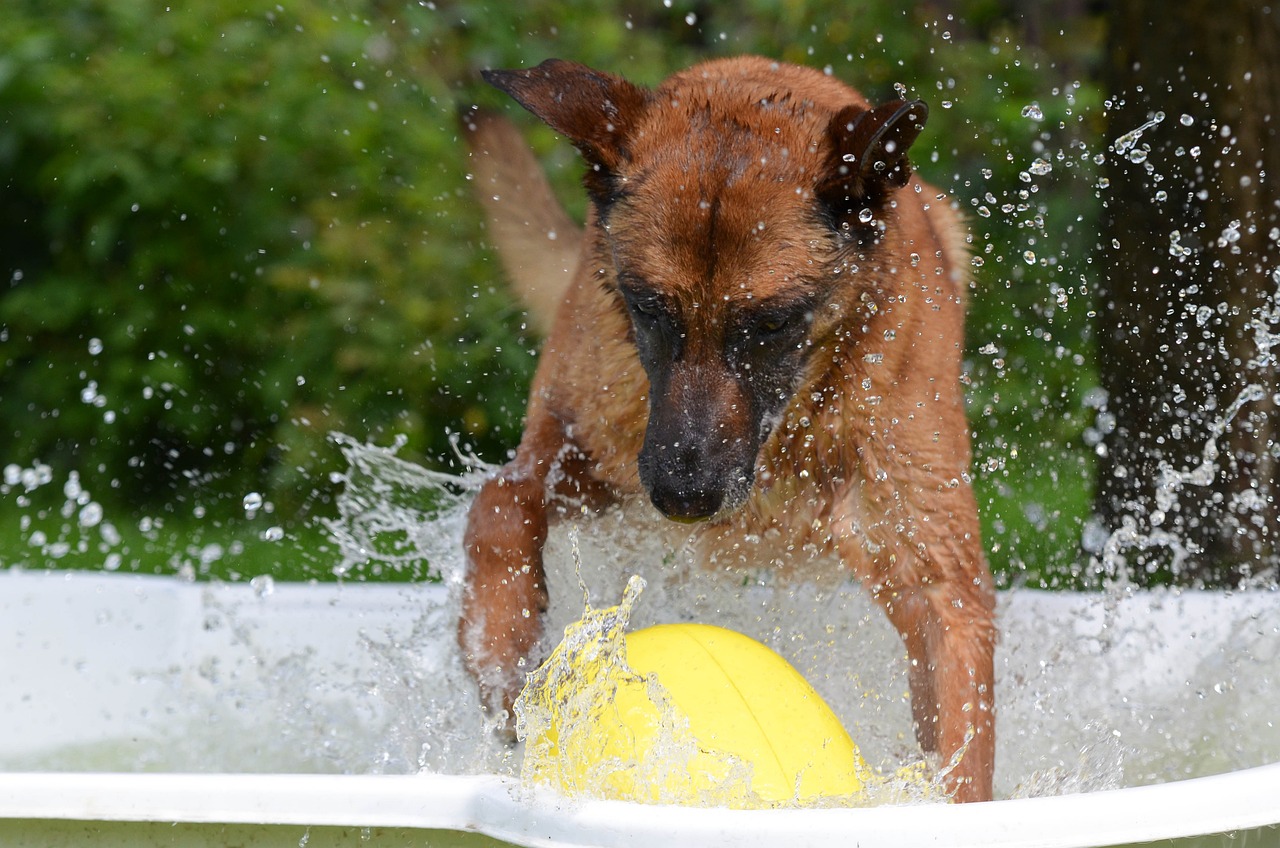
- Adding physical features to a play yard, run, or kennel such as beds, raised platforms, ramps, steps, toys, climbing structures, digging pits/sand boxes, water pools, or tunnels
- Having indoor/outdoor kennels
Topic(s): Bare Bones Basics, Behavior, Breeder Resource, Enrichment, Types of Enrichment