
The Importance of Good Maternal Care for Puppies
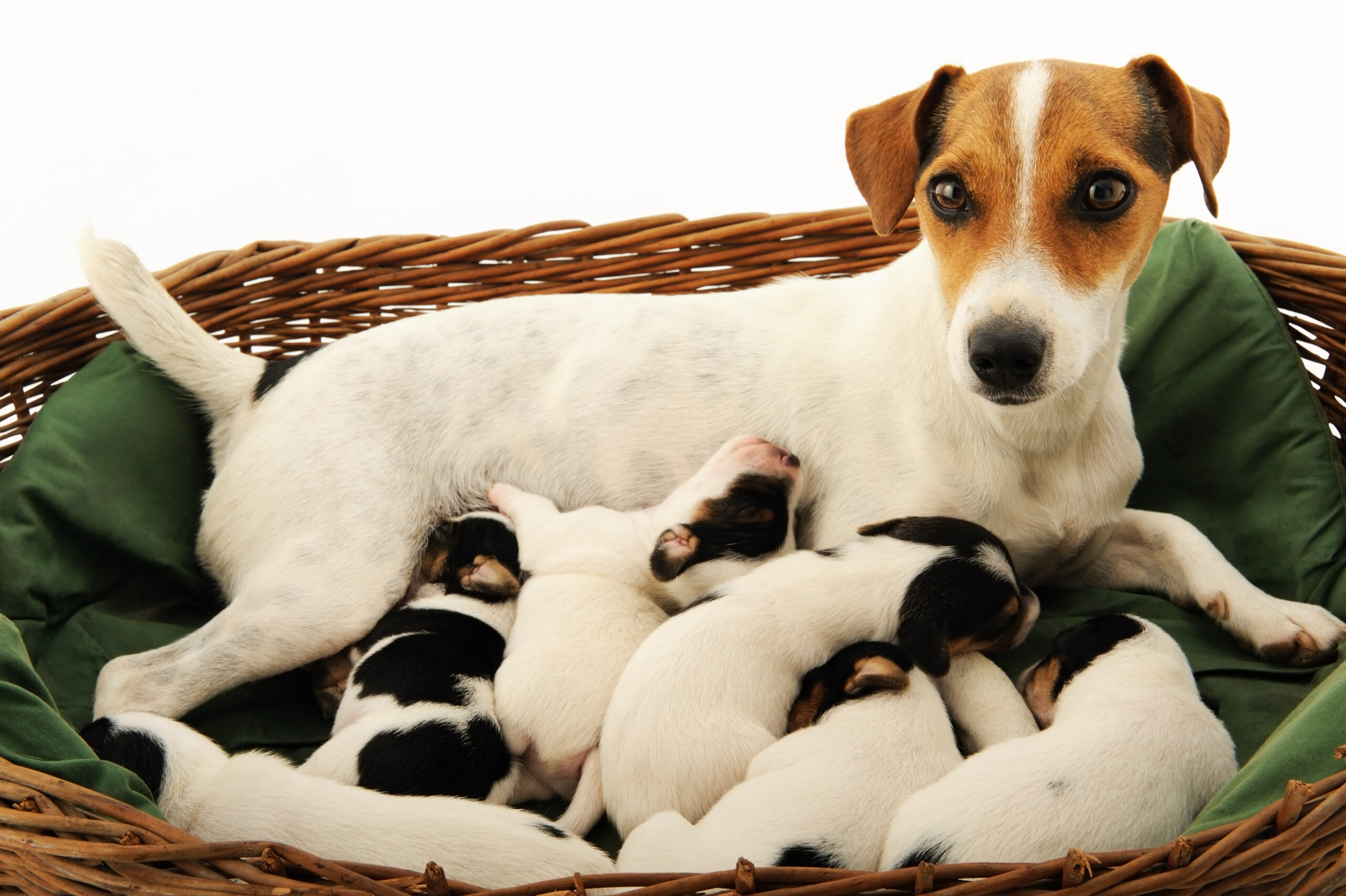
Mothers provide their offspring with care to promote their survival and good health. Maternal care includes feeding and physical contact that keeps newborn puppies warm. Mothers groom their puppies to keep them clean and to help them nurse and eliminate. She will also have the instinct to protect her puppies from other animals. As puppies get older, mom will teach them social skills as well.
Why is maternal care for puppies important?
Puppies are born helpless, unable to see, hear, or maintain their body temperature for their first few weeks. When puppies are hungry, cold, or uncomfortable, they will cry or whine. Mothers respond quickly to those sounds!
But maternal care has impacts beyond puppyhood. The quality of maternal care affects later physical, cognitive, behavioral, and social development. Maternal care can even have lifelong effects on health and behavior. This is why good maternal care is so important.
What can impact quality of maternal care?
Several key hormones influence maternal care. Oxytocin is one of the most important. Oxytocin increases the mother’s interest in her pups and reduces anxiety.
The experience of the dam is also important. Sometimes first-time mothers struggle with caring for their pups. Check on her and her puppies regularly to make sure she is caring for them. That said, do not feel obligated to hover – that can be stressful for some new mothers.
Stress can negatively impact maternal care. Provide your dams with a calm, quiet environment to care for her puppies. Keep the whelping box or pen away from high traffic areas or other dogs in your kennel. Dog appeasing pheromones (DAP) may help ease stress. Research suggests that pheromones can increase the time dams stay with their puppies.
When mom needs support
For the first few days, check the puppies every few hours. This is especially important for first-time mothers. Make sure all puppies are nursing and seem warm and content. They should not be crying or cold. If you need to, you can place them on the hind teats to encourage them to suckle.
If mom leaves her puppies alone for prolonged periods, provide supplemental heat such as a pet-safe heating pad. There should be plenty of room in the whelping box for the puppies to roll away from any supplemental heat. Puppies that spread out instead of cuddling with each other are too warm.
Effects of maternal care on puppy outcomes
Maternal care helps young animals beyond day-to-day survival. Grooming and other care helps the stress response system develop. This will help animals cope with and respond to stressful situations appropriately.
Studies have found that poor maternal care increases:
- adult fearfulness and barking
- the chance that an animal will be a poor mother themselves
Better quality maternal care has been associated with:
- fewer signs of stress
- more exploratory behavior in 8-week old puppies
- improved cognitive functioning in adult animals
Support your dam(s) so that she can provide good care to her pups.
Quick tip: Use non-toxic permanent markers of different colors to identify each pup. Mark puppies on their stomachs.
Weigh puppies daily. If the puppies are losing weight, contact your veterinarian. Puppies should gain weight daily. You may need to provide supplemental bottle- or tube-feeding. Your veterinarian can show these techniques to you.
How does maternal care change with puppy development?
As puppies become older and more mobile, they initially seek out their mother to nurse. Over time, as they begin to wean and start eating solid food, the mother will spend more time away from her puppies. She will groom and nurse them less. This encourages independence.
Weaning is the process of moving from milk to solid food. During weaning, animals experience physical changes (such as in the digestive system). They also experience changes in their relationship with their mother. The mother will often spend more time away from her offspring. Puppies also become more independent.
Wean puppies gradually. The weaning process begins at around 3-4 weeks of age when puppies will start eating wet food. Weaning often continues until 7 to 10 weeks of age. At that point, they should be eating solid food.
When are puppies ready to move on?
Puppies should stay with their mothers until they are at least 7 weeks old. They should also stay with their litter mates until they are at least 8 weeks old.
The ideal time for puppies to go to a new home is between 8 and 12 weeks. This gives them plenty of time with mom and siblings. It also gives them a few weeks within their socialization window in their new home. Toy breeds can be more fragile, and often stay with the litter until 12 weeks.
Topic(s): Bare Bones Basics, Behavior, Breeder Resource, Maternal Care, Puppy Development