
Incorporating Canine Behavior and Welfare Into Kennel Design
Dog Friendly Kennel Design
Thoughtful kennel design incorporates how dogs experience their environment. Planning should consider dogs’ senses of hearing, touch, smell, and sight. This supports dogs’ mental and physical health.
Kennels designed to support physical safety will reduce injury, toxin exposure, and spread of disease.
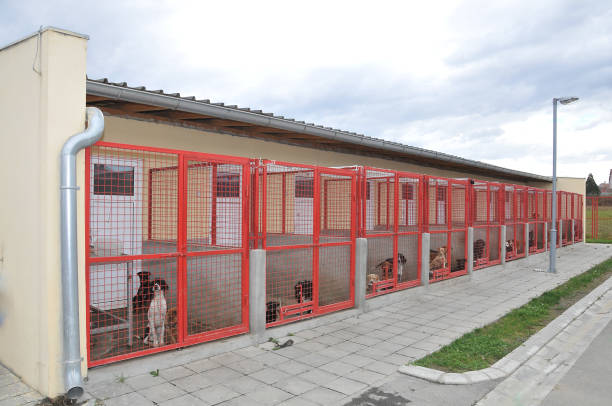
Kennels that Support Dog Behavior and Welfare

Positive Impacts for Caretakers
A well-designed kennel makes it easier to care for, clean, and socialize your dogs. This increases safety for dogs and humans!
Positive Impacts for Dogs & Puppies
A good environment supports learning and positive behaviors in dogs and puppies. That in turn impacts how well they do in their future home.
Ensuring good welfare means providing more than just food, water, and shelter. Meeting dogs’ behavioral and psychological needs is essential. Some ways to meet their needs include:
- Reducing environmental stressors, such as noise
- Using space effectively
- Building enrichment into the structure of the kennel
Potential environmental stressors for dogs include noise, odors, lighting, temperature, and humidity.
To learn more, read our series of handouts on Environmental Sources of Stress for Kenneled Dogs:
The Effective Use of Space
Space provided should allow dogs and puppies to engage in healthy behaviors. The minimum standard is for dogs to “comfortably sit, stand, and lie in a normal manner and to turn about freely.”
However, more research is needed to determine the best kennel size for dogs. A dog’s needs may vary based on age, breed, size, sex, or physical health status.
Building Enrichment
Enrichment changes the kennel environment in ways that improve dog welfare. It also:
- Helps dogs cope with stress
- Gives dogs control over some aspects of their environment
Read our Environmental Enrichment Handout to learn more!
Incorporate enrichment into kennel design. Multiple levels, stairs, and a variety of safe surfaces increases the quality and complexity of the dog’s living space. Furnish areas with structures that allow resting, climbing, hiding, or elevation.
Complex environments:
- Support physical and behavioral health
- Prepare puppies and retired breeding dogs for new homes

Group Housing
Some dogs benefit from being housed in pairs or groups. Larger runs that can accommodate multiple dogs may increase sleep, exploration, play, and other desirable behaviors. Group housing may reduce undesirable behaviors and improve dog-caretaker relationships. Monitor interactions between dogs to make sure they are compatible.
Designated Areas
Support canine welfare by creating use-specific spaces (such as a home pen, whelping pen, and indoor or outdoor play yards). Keep areas for medical treatment and whelping away from noise and foot traffic.

Outdoor Areas
Split runs allow dogs to choose to be inside or outside. A separate outdoor play yard is a great way to provide enrichment and exercise.
Outdoor areas should contain and protect dogs from inclement weather and predators.
All dogs need access to sheltered areas. Ensure that dogs do not have to compete for them. Areas must be well drained so dogs are not forced to lie in damp areas to access shade.
Dogs need resources to keep themselves as cool or warm as needed. These can include: outdoor houses, misters, heat lamps, and windbreaks. Be sure to consider breed differences and weather.
Topic(s): Bare Bones Basics, Behavior, Breeder Resource, Designs that Support Good Welfare, Kennel - Complex Environments, Kennel Design