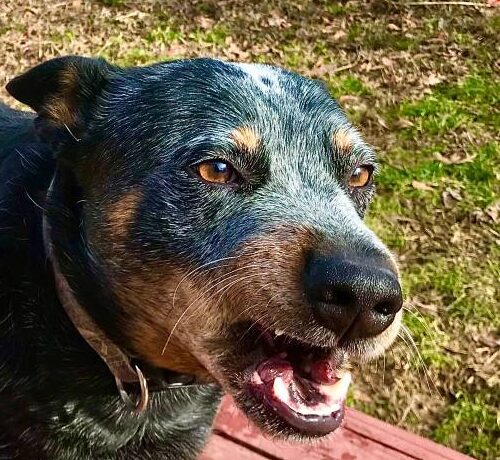
This study explored the influence of five types of olfactory stimulation (control, lavender, chamomile, rosemary and peppermint) on the behaviour of 55 dogs housed in a rescue shelter. The dogs were exposed to each type of olfactory stimulation, through the diffusion of essential oils, for 4 h a day for 5 days, with an intervening period of 2 days between conditions. The dogs’ behaviour was recorded on days 1, 3 and 5, during each condition of olfactory stimulation. Certain aspects of the dogs’ behaviour were influenced by the odours. Continue Reading The Influence of Olfactory Stimulation on the Behaviour of Dogs Housed in a Rescue Shelter
To investigate the role of experience in humans’ perception of emotion using canine visual signals, we asked adults with various levels of dog experience to interpret the emotions of dogs displayed in videos. The video stimuli had been pre-categorized by an expert panel of dog behavior professionals as showing examples of happy or fearful dog behavior. In a sample of 2,163 participants, the level of dog experience strongly predicted identification of fearful, but not of happy, emotional examples. Continue Reading Human Perception of Fear in Dogs Varies According to Experience with Dogs
American Veterinary Society of Animal Behavior. (2008). AVSAB position statement on Puppy Socialization. Retrieved February 14, 2022, from https://avsab.org/wp-content/uploads/2018/03/Puppy_Socialization_Position_Statement_Download_-_10-3-14.pdf Continue Reading AVSAB Puppy Socialization Position Statement
Bray, E.E., Sammel, M.D., Cheney, D.L., Serpell, J.A. And Seyfarth, R. M. (2017). Characterizing Early Maternal Style in a Population of Guide Dogs. Frontiers in Psychology. Continue Reading Characterizing Early Maternal Style in a Population of Guide Dogs
Yu, Y., Wilson, B., Masters, S., van Rooy, D., and McGreevy, P. Mortality resulting from undesirable behaviours in dogs aged three years and under attending primary-care veterinary practices in Australia. problem behavior intervention Continue Reading Mortality Resulting From Undesirable Behaviours in Dogs Aged Three Years and Under Attending Primary-Care Veterinary Practices in Australia
Scott, J.P. and Fuller, J.L., (1965). Genetics and the social behavior of the dog. 1st ed. Chicago, IL: University of Chicago Press. Socialization Early Exposure Continue Reading Genetics and the Social Behavior of the Dog