Filter by Category: Behavior
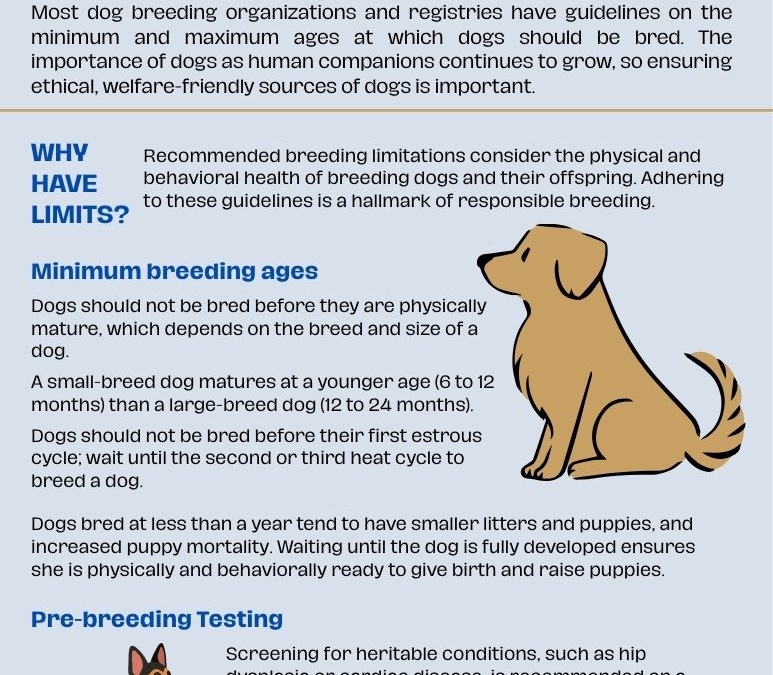
from the Croney Research Group Most dog breeding organizations and registries have guidelines on the minimum and maximum ages at which dogs should be bred. The importance of dogs as human companions continues to grow, so ensuring ethical, welfare-friendly sources of...
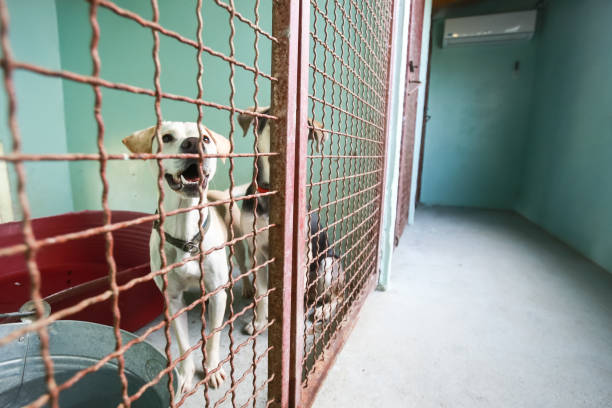
Dogs are often housed alone in shelter settings to reduce injury and disease spread. However, social isolation can be a stressor for dogs. Prior studies have suggested that cohousing can produce behavioral and physiological benefits. These studies have typically...
What is Environmental Enrichment? Enrichment is changing an animal’s environment to promote behavioral and physical wellness. Enrichment usually involves the addition of objects, social interactions, or other stimulation. Enrichment should be a safe and positive...
From the Croney Research Group Before giving birth, dogs naturally seek out a place to nest. Support your dog’s instincts by providing a whelping area that feels safe and comfortable. A good whelping box set up reduces stress for your dam so she can focus...
Dog Friendly Kennel Design Thoughtful kennel design incorporates how dogs experience their environment. Planning should consider dogs’ senses of hearing, touch, smell, and sight. This supports dogs’ mental and physical health. Kennels designed to support...
Puppies need appropriate socialization during the sensitive period (between 3-14 weeks of age). A well socialized puppy will grow into a friendly adult dog and socialization will prevent fear-related behavior problems. Socialize puppies to people who are unfamiliar to...