
Management and behavioral factors associated with rehoming outcomes of dogs retired from commercial breeding kennels
Additional Resource
Research question: Do retired breeding dogs have difficulty adjusting from the kennel to a home?
Methods
Assessment of:
- Behavior and health of 590 dogs
- Management practices in 30 commercial breeding kennels
Survey of 32 adopters of retired breeding dogs
Results
- Most dogs were friendly when an experimenter approached……but became more fearful when the experimenter moved to open their pen or touch them.
- Overall, dogs were healthy and clean. Around 18% had eye discharge and 25%of dogs were overweight.
- When there were fewer dogs for each caretaker to care for, dogs scored better on behavior and health assessments.
- Most breeders offered their dogs exercise, enrichment and puppy socialization. Socialization of adult dogs and training were less common.
- All adopters were satisfied with their new dog. More than 73% said the dog was exceeding their expectations.
- Dogs who were more friendly in the kennel were more trainable and less fearful in the home.
Research Takeaways
- Overall, the dogs in the study were healthy and friendly.
- Kennel management can have positive impacts: Fewer dogs for each person to care for was associated with better dog behavior and health.
- Dogs who were friendly in the kennel tended to be more trainable and friendly in the home.
- Adopters’ satisfaction with their new dogs was high.
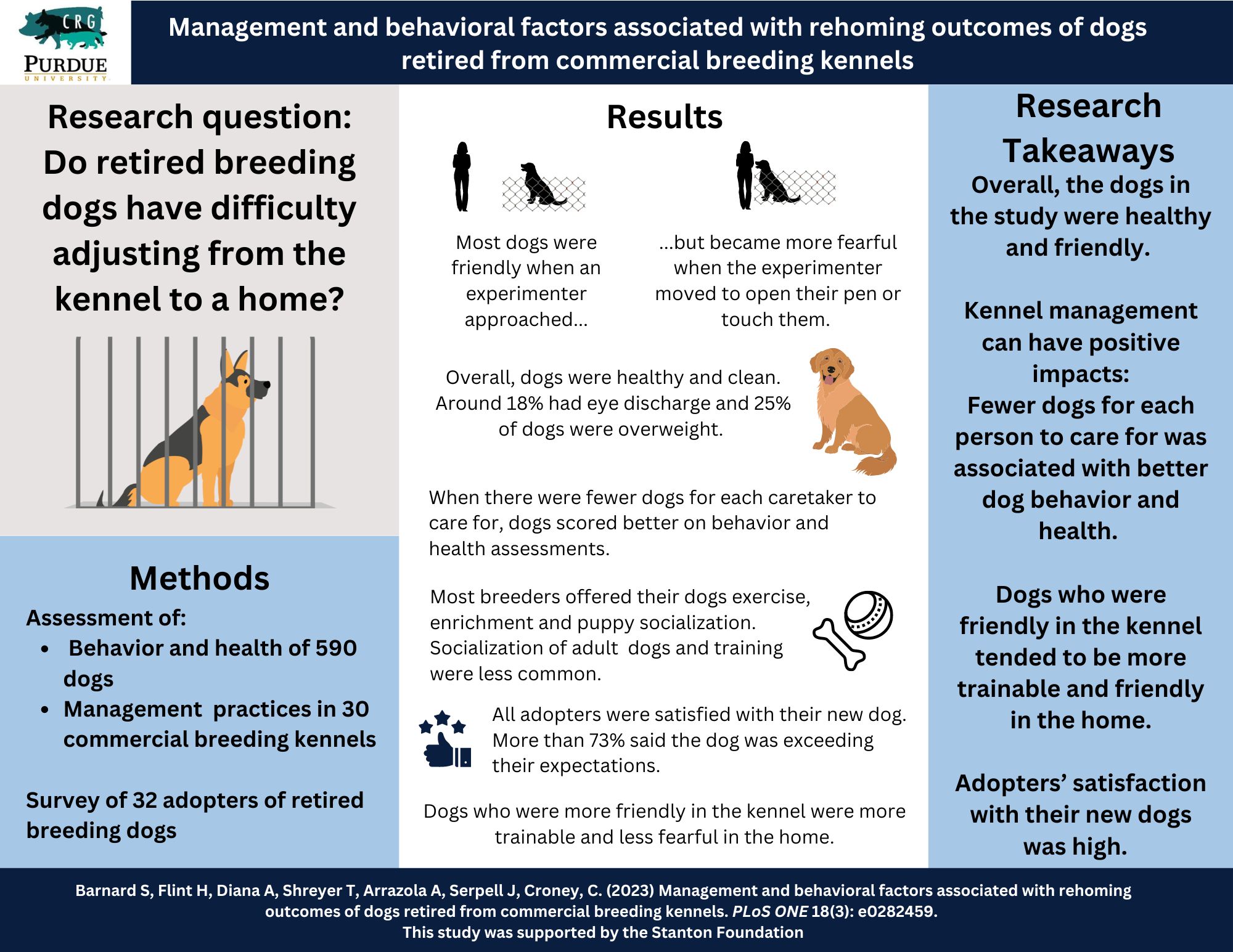
Download a short graphical summary of the Croney Research Group study on outcomes of retired/rehomed commercial breeding dogs below.
Topic(s): Breeder Resource, Retiring & Rehoming: Environmental Considerations