
Dental care for dogs

Brushing your dog’s teeth is an important part of your care for them. Proper dental care prevents disease and pain. Learn more about how to make taking care of your dog’s teeth easier for both of you.
BEFORE YOU EVEN BEGIN!
Check with your veterinarian – is your dog’s mouth healthy? Do they need a cleaning by a veterinarian? You don’t want to start training your dog if their mouth is painful, so start training with a healthy mouth.
Supplies You Need for Tooth Brushing
A pet or child’s toothbrush
Toothpaste FOR DOGS
Getting your dog used to having their mouth touched
- Get your puppies used to handling when they are young. Their future caregivers will thank you!
- Wait until your dog is calm. Start by gently petting their head and muzzle area. If they are comfortable with this, say “good” and give treats. Continue for a few days until your dog seems comfortable.
- Repeat the above, but now add a small lip lift – just gently raising the lip for a brief moment. Then say “good” and give treats.
- Repeat, but now add a gentle tooth touch to the process. Take your time and make sure your dog is comfortable at every step.
Just add toothpaste (for dogs only please!)!
Give your dog some toothpaste! Most pet toothpastes are a flavor that dogs enjoy. Let your dog lick a little bit of toothpaste off your finger. When they are comfortable with this, gently rub your finger with the paste on it, against a tooth.
Never use human toothpaste on your dogs!
 If your dog freezes, tries to escape, tries to bite, or otherwise seems stressed out, stop and ask your attending veterinarian for help on how to best proceed.
Introduce the toothbrush
Let your dog lick the toothpaste off the brush. Do not try to brush the dog’s teeth, just let them enjoy getting the treat off the brush themselves. The goal is for them to have a positive association with the brush being near and in their mouth.
Time to Put It All Together
- Once your dog is comfortable with the brush near their mouth, with the toothpaste, you can begin getting them used to brushing.
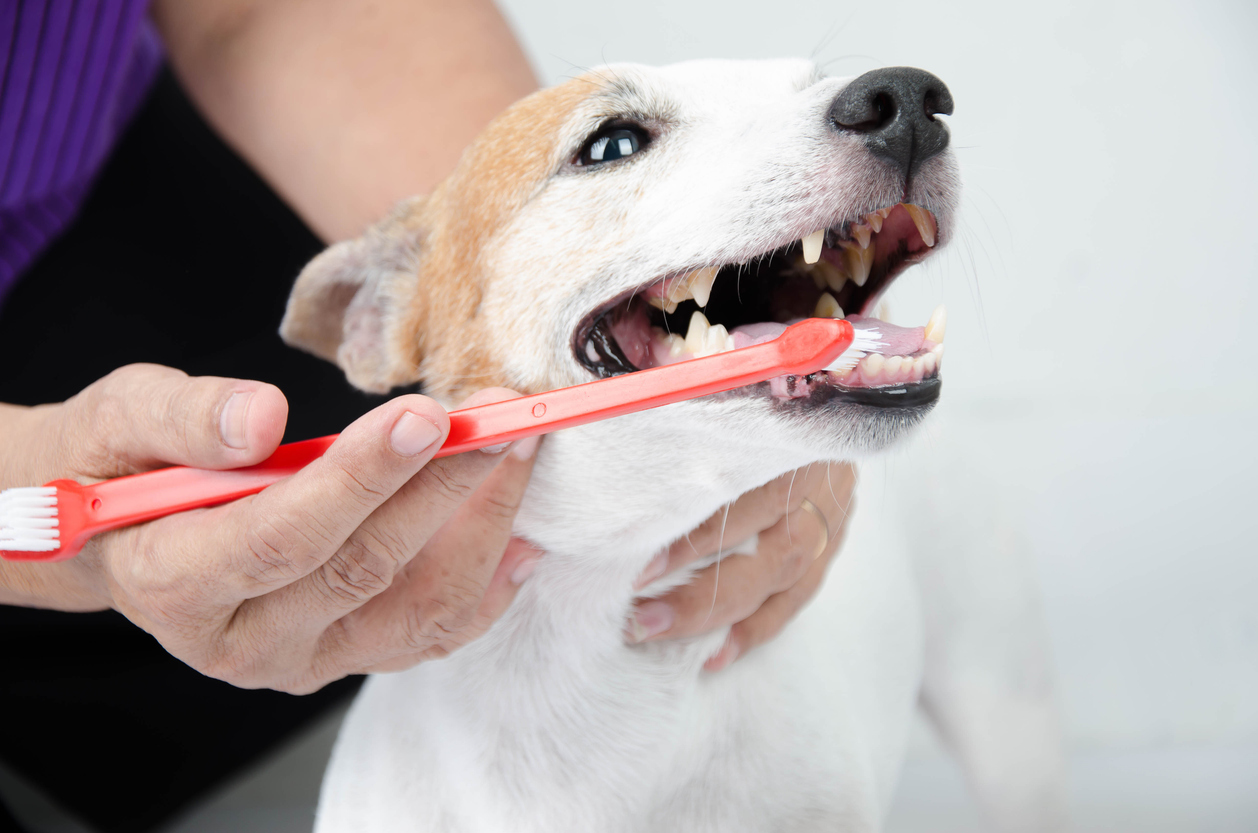
- Focus on the outer edges of the teeth. Always rub gently – you do not have to “scrub” the teeth to have a positive effect.
- Start with the front teeth and stop there!
- If you were successful, try a bit longer the next day.
- Slowly increase the number of teeth you can brush. Gradually make your way toward the back of your dog’s mouth.
Other tips
- You should be able to brush all of your dogs teeth in about a minute. Frequent, short brushing will be very effective to keep your dog’s teeth healthy.
- Brush your dog’s teeth on a routine so they know when to expect it. Before meals is a good choice!
- If you struggle to brush your dog’s teeth, don’t panic! There are other options, including products that reduce plaque and tartar, including diets, chews, treats, dental sticks, water additives, sprays and wipes. See vohc.org for approved, effective products.
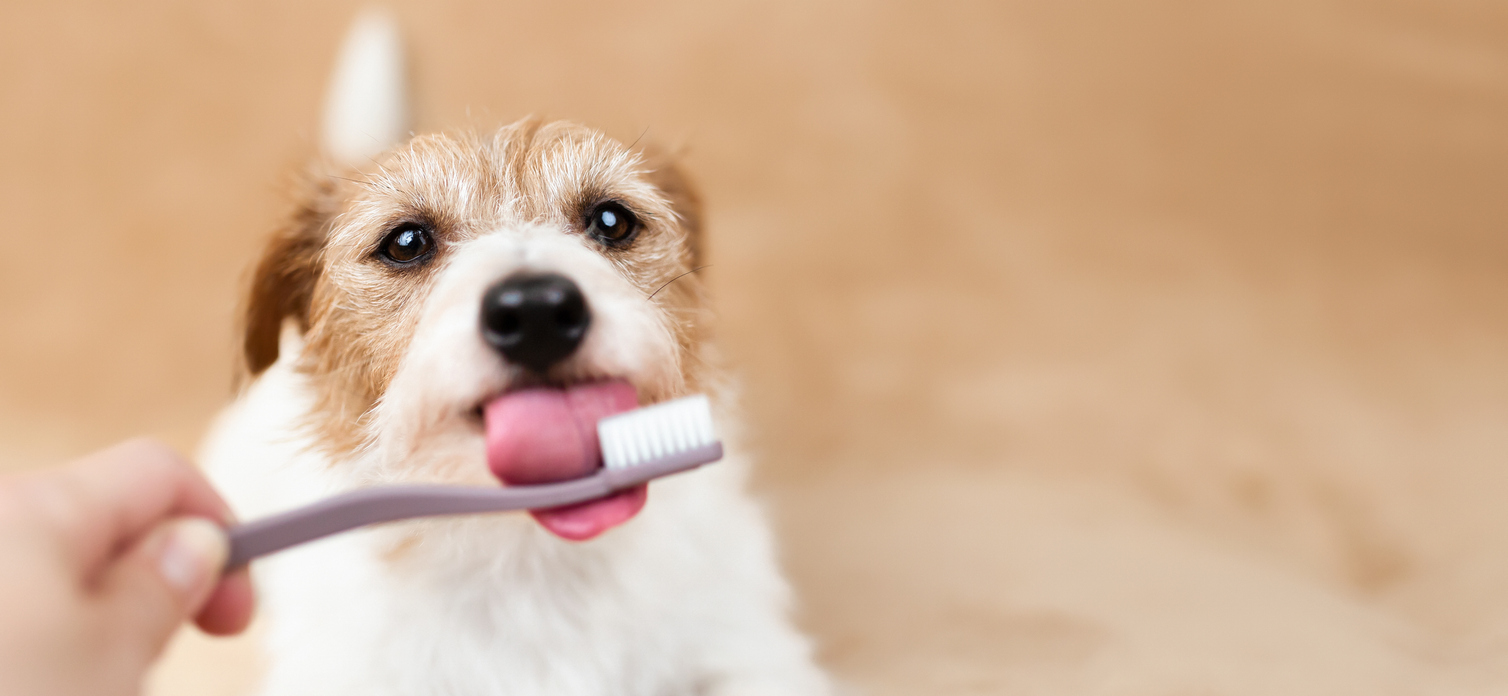
At every stage – let your dog approach the toothpaste, your finger, and the toothbrush. Never hold your dog’s head or move towards their head if they back away.
Although the process of training may seem slow, it will make things much quicker for you in the long run if your dog maintains a sense of control.
Topic(s): Bare Bones Basics, Breeder Resource, Preventative Health Care - Grooming & Nail Care, Veterinary Care